
Domestic Asset Protection Trust Jurisdiction Comparison
Not all Domestic Asset Protection Trust (DAPT) jurisdictions provide the same legal protections. Stuart Green Law compares the statutory features that shape how DAPTs protect wealth, helping families and their advisors evaluate the legal frameworks available across the United States.

Choosing to establish a Domestic Asset Protection Trust (DAPT) is only the first decision. The laws governing DAPTs vary significantly among the states that authorize them, with differences in creditor protection, statutes of limitation, exception creditors, privacy, taxation, and other provisions that can affect how a trust operates. Comparing these laws side-by-side allows families and their advisors to look beyond whether a state simply permits DAPTs and evaluate the strength of the legal framework behind them.
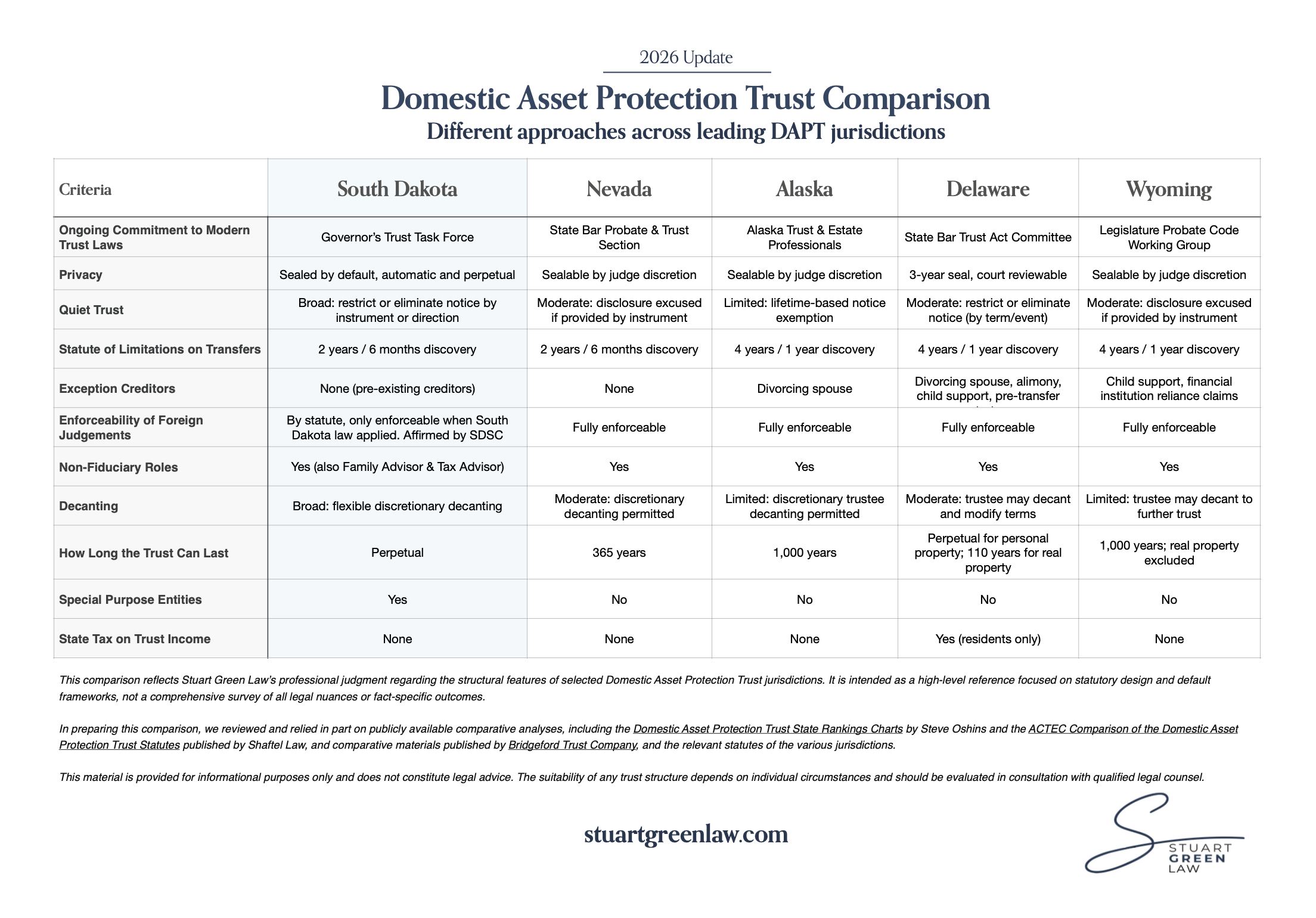

The strength of a jurisdiction is found in the details.
No single statute determines the strength of a Domestic Asset Protection Trust (DAPT) jurisdiction. A short statute of limitations may be important, but it is only one part of a much broader legal framework. Exception creditors, privacy protections, the treatment of preexisting claims, trust administration, fiduciary flexibility, and other statutory provisions all influence how effectively a trust can protect family wealth. Evaluating these laws together provides a more meaningful understanding of the protections each jurisdiction offers.
The appropriate jurisdiction ultimately depends on the family’s objectives, circumstances, and overall estate plan. This matrix is designed to provide an objective comparison of the leading DAPT jurisdictions, recognizing that no single feature carries the same importance in every situation. By evaluating the legal framework as a whole, families and their advisors can identify the jurisdiction best suited to support their long-term asset protection and estate planning goals.