Dynasty Trust Jurisdiction Comparison
Not all dynasty trust jurisdictions provide the same foundation for long-term planning. This comparison highlights the legal frameworks that shape how trusts preserve wealth, adapt to change, and continue serving families across generations.

A trust intended to serve multiple generations must be built for a future no family can fully predict. The strongest dynasty trust jurisdictions pair long trust duration with laws that allow the structure to evolve as families grow, fiduciaries change, tax laws develop, and new opportunities emerge. Selecting the right jurisdiction means considering not simply how long a trust can exist, but whether the legal framework can help preserve planning intent while giving future generations the tools they need to steward family wealth over time.
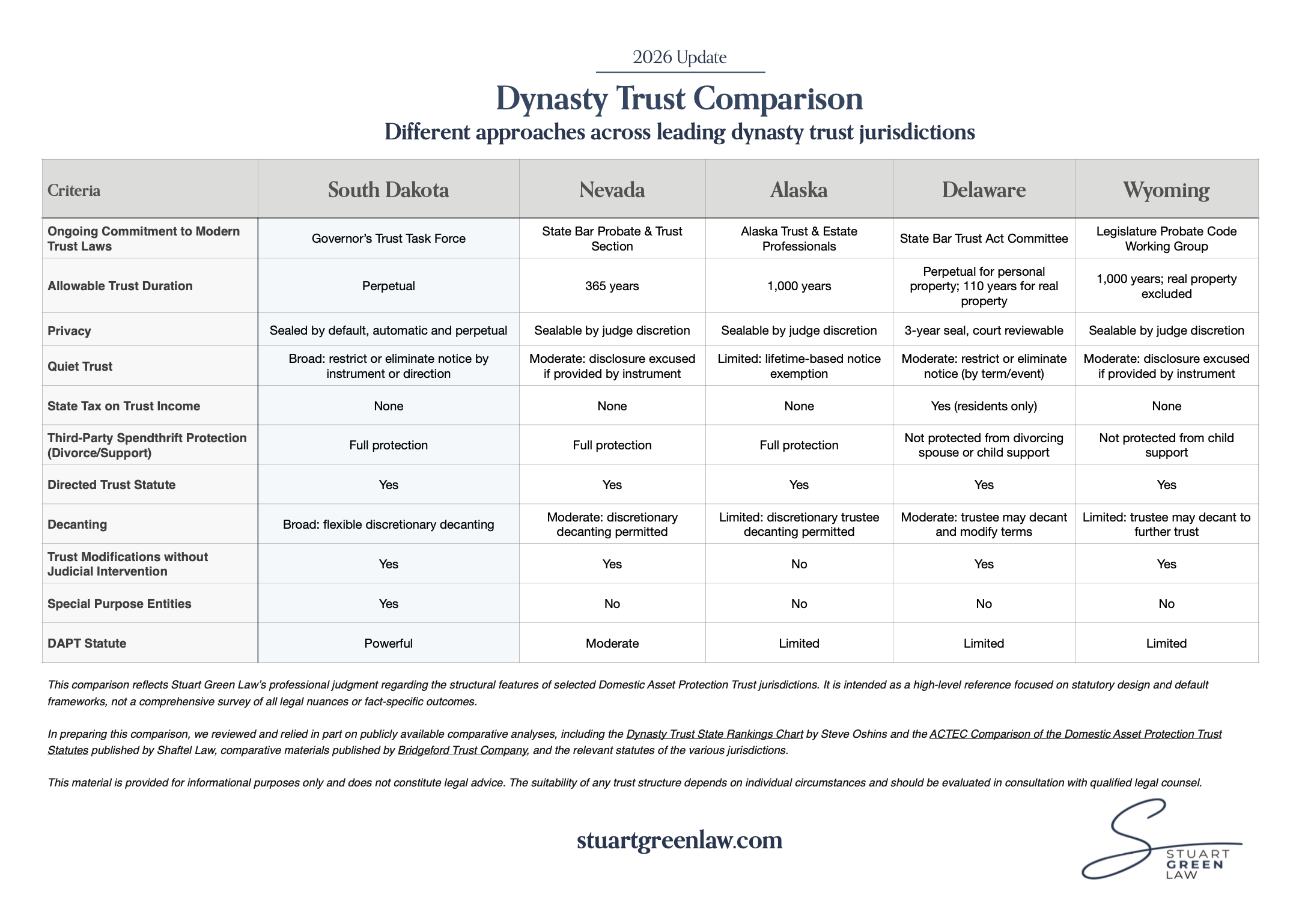

Looking beyond just trust duration.
A dynasty trust may remain in existence for decades, centuries, or even perpetually, making the laws governing its administration especially important. Trust duration establishes the possible time horizon, but families must also consider how the jurisdiction approaches privacy, asset protection, taxation, fiduciary authority, and ongoing administration. Together, these features determine the environment in which the trust will operate throughout its life.
The Stuart Green Law Dynasty Trust Jurisdiction Matrix examines these characteristics through the lens of long-term family wealth planning. By looking at how each state’s laws work together, families and their advisors can identify jurisdictions capable of supporting an enduring trust structure while preserving the flexibility necessary to respond to change. The objective is to select a legal framework that can continue serving the family and implementing the grantor’s vision long after the trust is established.