


Domestic Asset Protection Trust State Comparison (2026)
Book a Consultation

Selecting the right jurisdiction for a Domestic Asset Protection Trust (DAPT) is one of the most important structural decisions in modern estate planning. While many states now offer some version of DAPT legislation, meaningful differences remain in how those laws are designed and implemented.
This 2026 comparison evaluates five leading Domestic Asset Protection Trust jurisdictions: South Dakota, Nevada, Alaska, Delaware, and Wyoming. Although these states share common legal foundations, their statutory frameworks differ in how they address privacy, creditor protection, governance flexibility, and long-term durability.
Rather than assigning grades or numerical rankings, this comparison is organized around the foundational pillars that determine how a trust performs over time: privacy, asset protection control, family governance, and wealth management.
How to Compare Domestic Asset Protection Trust Jurisdictions
When evaluating DAPT states, the analysis should extend beyond headline features such as statutes of limitation. Durable trust planning requires understanding how multiple legal components interact within a single statutory framework.
Key structural considerations include:
- Privacy protections, including court sealing provisions and quiet trust authority
- Time limits on creditor claims and discovery rules
- Exception creditor carve-outs that may override asset protection
- Settlor retained powers and how they affect protection and flexibility
- Directed trust frameworks and trust protector roles
- Decanting and modification authority
- Dynasty trust duration limits
- State income tax treatment of trust income
- Institutional commitment to ongoing trust law development
The strength of a jurisdiction lies not in any single feature, but in how consistently these elements operate together.
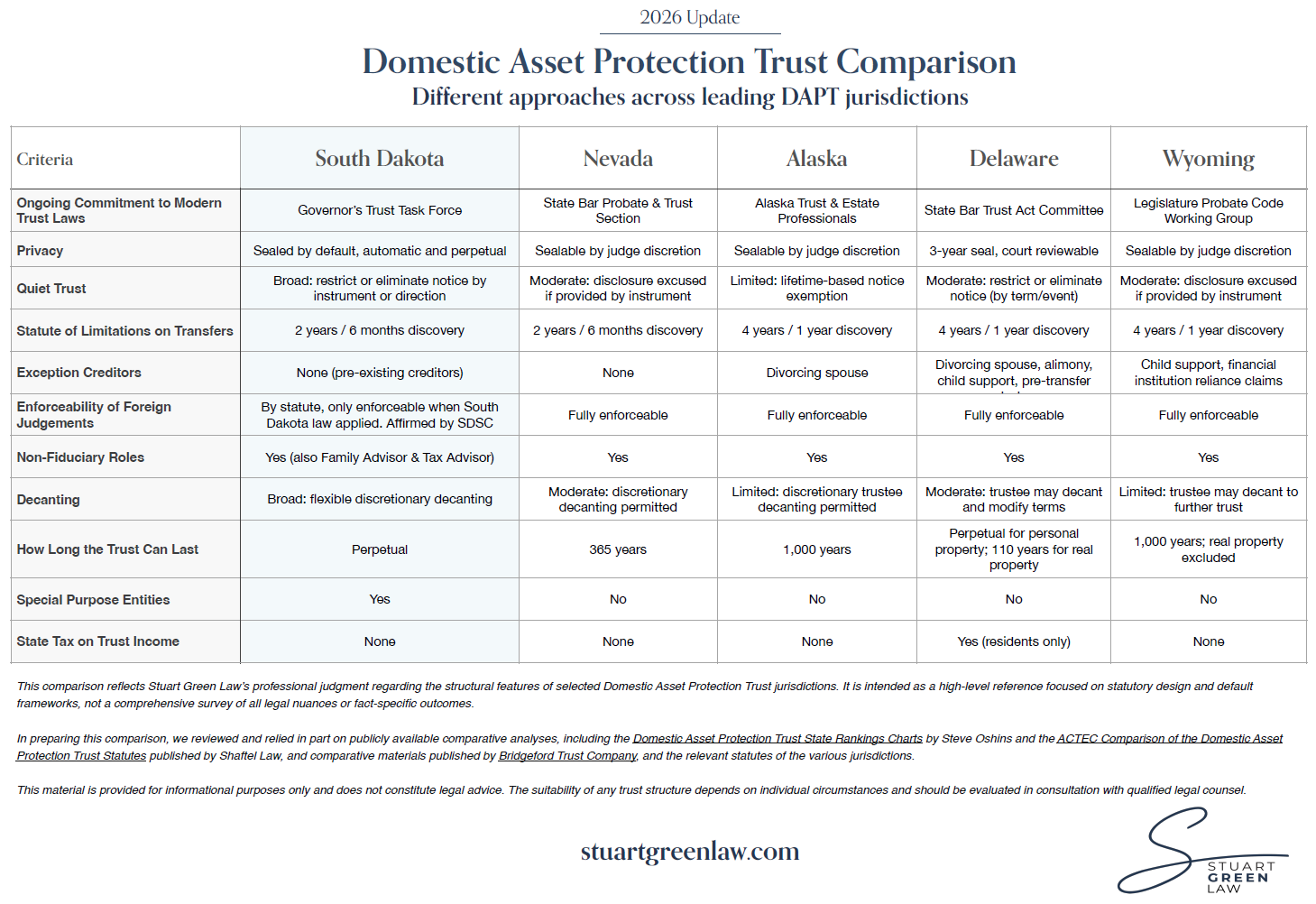
2026 Domestic Asset Protection Trust Comparison Chart
The chart below provides a high-level structural comparison of the five leading DAPT states. It reflects statutory design and default frameworks rather than isolated case outcomes.
Each state offers significant asset protection planning opportunities. However, differences in privacy architecture, exception creditor treatment, duration limits, and legislative infrastructure can materially affect long-term performance, particularly for dynasty trust planning.
Key Structural Distinctions Among Leading DAPT States
While there is broad overlap in areas such as directed trust statutes and discretionary decanting authority, several distinctions consistently influence jurisdiction selection.
- Privacy varies significantly. Some states provide automatic sealing mechanisms, while others rely on court discretion or affidavit-based confidentiality.
- Exception creditors differ in scope. Certain states recognize carve-outs for divorcing spouses, child support, or pre-transfer tort claims, while others maintain narrower exceptions.
- Dynasty duration ranges from fixed multi-century limits to effectively perpetual structures, with important nuances regarding real property.
- Legislative infrastructure and ongoing statutory refinement signal long-term stability for nonresident settlors.
For families designing trusts intended to endure for generations, these structural elements carry more weight than promotional rankings.
Why Jurisdiction Matters in Asset Protection Planning
A trust’s governing law establishes the rules under which it must operate for decades or even centuries. Jurisdiction affects not only creditor protection, but also administrative flexibility, governance structure, and long-term tax considerations.
Selecting a DAPT state should follow a clear articulation of planning objectives. Asset protection, family governance, privacy expectations, and tax strategy must align with the statutory framework that will govern the trust.
This comparison is intended as a structural reference to inform that evaluation. It is not a substitute for individualized legal advice. The appropriate jurisdiction for any Domestic Asset Protection Trust depends on the specific goals and circumstances of the settlor and family.
If you are evaluating a Domestic Asset Protection Trust in 2026, a thoughtful discussion grounded in statutory structure and long-term design is the appropriate starting point.
The Stuart Green Law Approach
A Modern Approach to Family Wealth
Stuart Green Law combines modern South Dakota trust law with integrated estate planning, wealth management, and fiduciary services for families throughout the United States and internationally. The firm’s approach is built around selecting the strongest legal framework available, maintaining continuity of planning judgment, and bringing every part of the family’s wealth strategy into alignment with its long-term objectives.
Perspectives on Modern Estate Planning
Modern estate planning continues to evolve alongside trust law, tax strategy, wealth management, and family governance. Our articles explore the ideas shaping sophisticated estate planning, providing thoughtful analysis of the legal structures and planning philosophies that preserve wealth across generations.